 Pathology Training Institute in Bangladesh Best Pathology Training Institute in Bangladesh

Introduction
In modern diagnostic medicine, laboratory investigations play a vital role in disease detection, monitoring, and prevention. Among the most important laboratory investigations is the Antibody Blood Test, which helps identify the presence of specific antibodies produced by the immune system in response to infections, vaccines, autoimmune disorders, and other medical conditions.
HRTD Medical Institute, a trusted name in medical education and diagnostic training in Bangladesh, emphasizes the importance of antibody testing as a core component of pathology and laboratory science. This detailed guide aims to provide a thorough understanding of antibody blood tests, their principles, types, clinical significance, procedures, interpretation, and future prospects.
Understanding the Immune System and Antibodies
The human immune system is a complex defense mechanism designed to protect the body from harmful pathogens such as bacteria, viruses, parasites, and toxins. When a foreign substance, known as an antigen, enters the body, the immune system responds by producing antibodies.
What Are Antibodies?
Antibodies, also called immunoglobulins (Ig), are Y-shaped proteins produced by B lymphocytes (plasma cells). Their primary function is to recognize, bind, and neutralize specific antigens.
Each antibody is highly specific, meaning one antibody targets only one specific antigen. This specificity makes antibody testing extremely valuable in medical diagnostics.
What Is an Antibody Blood Test?
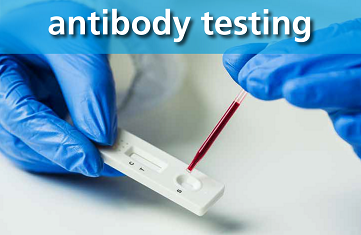
An Antibody Blood Test is a laboratory test that detects and measures antibodies present in the blood. The test helps determine whether a person has been exposed to a particular infection, has immunity due to vaccination, or is suffering from an autoimmune disorder.
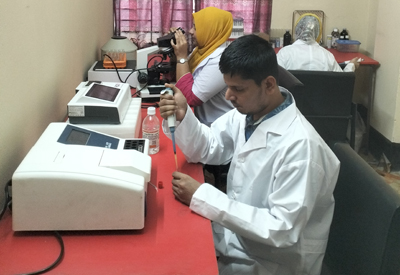
At HRTD Medical Institute, antibody blood tests are taught as an essential diagnostic tool in pathology and medical laboratory technology courses.
Antibody blood tests serve multiple purposes in healthcare:
- Detecting past or current infections
- Assessing immunity after vaccination
- Diagnosing autoimmune diseases
- Screening for chronic infections
- Supporting epidemiological studies
- Monitoring disease progression and treatment response
These tests are widely used in hospitals, diagnostic centers, research laboratories, and public health programs.
Types of Antibodies Detected in Blood Tests
1. Immunoglobulin G (IgG)
IgG is the most abundant antibody in the blood. It indicates past infection or long-term immunity.
- Appears later in infection
- Persists for months or years
- Crosses the placenta to protect newborns
2. Immunoglobulin M (IgM)
IgM is the first antibody produced in response to an infection.
- Indicates recent or acute infection
- Useful in early disease diagnosis
3. Immunoglobulin A (IgA)
IgA is found in mucosal secretions such as saliva, tears, and breast milk.
- Plays a role in mucosal immunity
- Important in gastrointestinal and respiratory infections
4. Immunoglobulin E (IgE)
IgE is associated with allergic reactions and parasitic infections.
- Elevated in asthma, allergies, and eczema
5. Immunoglobulin D (IgD)
IgD plays a regulatory role in the immune system and is less commonly tested.
Common Antibody Blood Tests
At HRTD Medical Institute, students learn about a wide range of antibody tests, including:
- COVID-19 Antibody Test
- Hepatitis B Surface Antibody (Anti-HBs)
- Hepatitis C Antibody (Anti-HCV)
- HIV Antibody Test
- Dengue IgG and IgM Test
- Typhoid Antibody Test (Widal Test)
- Rubella Antibody Test
- TORCH Panel
- ANA (Antinuclear Antibody) Test
- Rheumatoid Factor (RF)
Indications for Antibody Blood Testing
Doctors may recommend antibody blood tests for several reasons:
- Suspected infection
- Post-vaccination immunity assessment
- Autoimmune disease evaluation
- Chronic or unexplained symptoms
- Prenatal screening
- Occupational health screening
Principle of Antibody Blood Test
The principle of antibody testing is based on the antigen-antibody reaction. When an antibody encounters its specific antigen, binding occurs, which can be detected through various laboratory techniques.
Common methods include:
- Enzyme-Linked Immunosorbent Assay (ELISA)
- Chemiluminescence Immunoassay (CLIA)
- Rapid Immunochromatographic Tests
- Western Blot
- Agglutination Tests
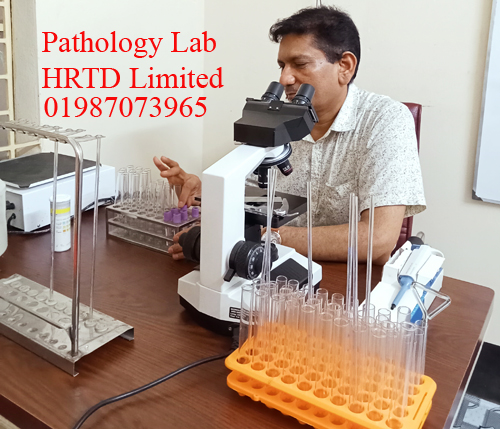
Students at HRTD Medical Institute receive hands-on training in these advanced diagnostic techniques.
Procedure of Antibody Blood Test
Sample Collection
- A small amount of venous blood is collected
- Usually taken from the antecubital vein
- Collected in a plain or serum-separating tube
Laboratory Processing
- Blood is allowed to clot
- Serum is separated by centrifugation
- Serum is used for antibody detection
Testing and Analysis
- Serum is exposed to specific antigens
- Reaction is measured using automated or manual methods
- Results are recorded and interpreted
Preparation for Antibody Blood Test
In most cases, no special preparation is required. However:
- Inform the doctor about medications
- Mention recent vaccinations
- Follow specific instructions if given
Interpretation of Antibody Blood Test Results
Positive Result
- Indicates exposure to infection or successful vaccination
- May suggest current or past infection depending on antibody type
Negative Result
- No detectable antibodies
- May indicate no exposure or testing done too early
Borderline or Indeterminate Result
- Requires repeat testing or further investigation
At HRTD Medical Institute, students are trained to understand result interpretation in correlation with clinical findings.
Advantages of Antibody Blood Tests
- High specificity and sensitivity
- Useful for retrospective diagnosis
- Helps assess immune status
- Supports disease surveillance
- Minimally invasive
Limitations of Antibody Blood Tests
- Cannot always detect early infection
- False positives or negatives may occur
- Does not always indicate active infection
- Cross-reactivity in some tests
Understanding these limitations is a key part of pathology education at HRTD Medical Institute.
Role of Antibody Testing in Public Health
Antibody testing plays a major role in:
- Disease outbreak monitoring
- Vaccine efficacy studies
- Herd immunity assessment
- Epidemiological research
During pandemics and endemic diseases, antibody tests provide valuable population-level data.
Antibody Blood Test in Medical Education
HRTD Medical Institute integrates antibody testing into its:
- Diploma in Pathology
- Medical Laboratory Technology courses
- Short-term diagnostic training programs
Students gain theoretical knowledge and practical laboratory experience, preparing them for careers in diagnostic laboratories, hospitals, and research institutions.
Quality Control and Safety
Accurate antibody testing requires:
- Proper sample handling
- Calibrated instruments
- Quality control samples
- Trained laboratory personnel
HRTD Medical Institute emphasizes laboratory ethics, biosafety, and quality assurance in all its training programs.
Future of Antibody Blood Testing
With advancements in medical science, antibody testing is becoming:
- More automated
- Faster and more accurate
- Integrated with molecular diagnostics
- Essential in personalized medicine
Rapid antibody tests and multiplex assays are shaping the future of diagnostics.
Why Choose HRTD Medical Institute?
HRTD Medical Institute is committed to excellence in medical education and diagnostic training.
Key Strengths:
- Experienced faculty
- Modern laboratory facilities
- Practical-oriented curriculum
- Career-focused training
- Strong reputation in pathology education
Students trained at HRTD Medical Institute gain in-depth knowledge of antibody blood tests and other essential diagnostic procedures.
Conclusion
The Antibody Blood Test is an indispensable diagnostic tool in modern medicine. It provides valuable insights into immune responses, disease exposure, and immunity status. From infectious diseases to autoimmune disorders, antibody testing plays a critical role in patient care and public health.
Through comprehensive education and hands-on training, HRTD Medical Institute continues to contribute to the development of skilled laboratory professionals who uphold accuracy, reliability, and ethical standards in diagnostic medicine.