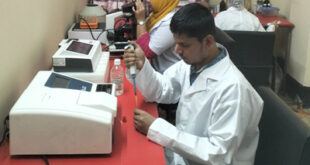
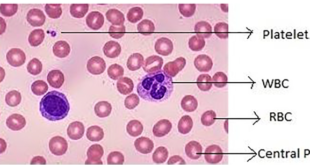
 Pathology Training Institute in Bangladesh Best Pathology Training Institute in Bangladesh

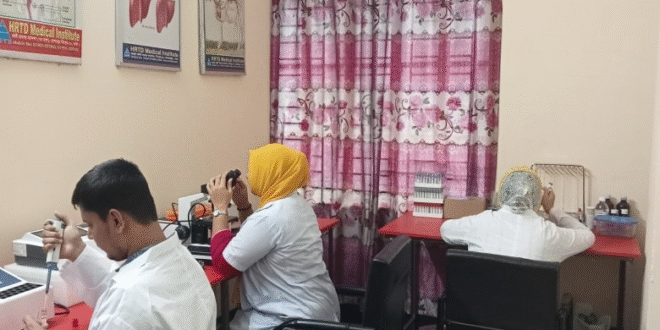
Best Pathology Training Course in Dhaka 01797522136
Introduction
In modern healthcare, pathology is the backbone of diagnosis. Without accurate laboratory findings, clinical medicine becomes blind. Physicians may suspect a disease, but pathology confirms it. Whether it is cancer, viral infection, autoimmune disease, metabolic disorder, or a routine blood test, pathology guides every decision. For students, medical technologists, fresh graduates, or health professionals, choosing a high-quality pathology training course is one of the most impactful steps for career development.
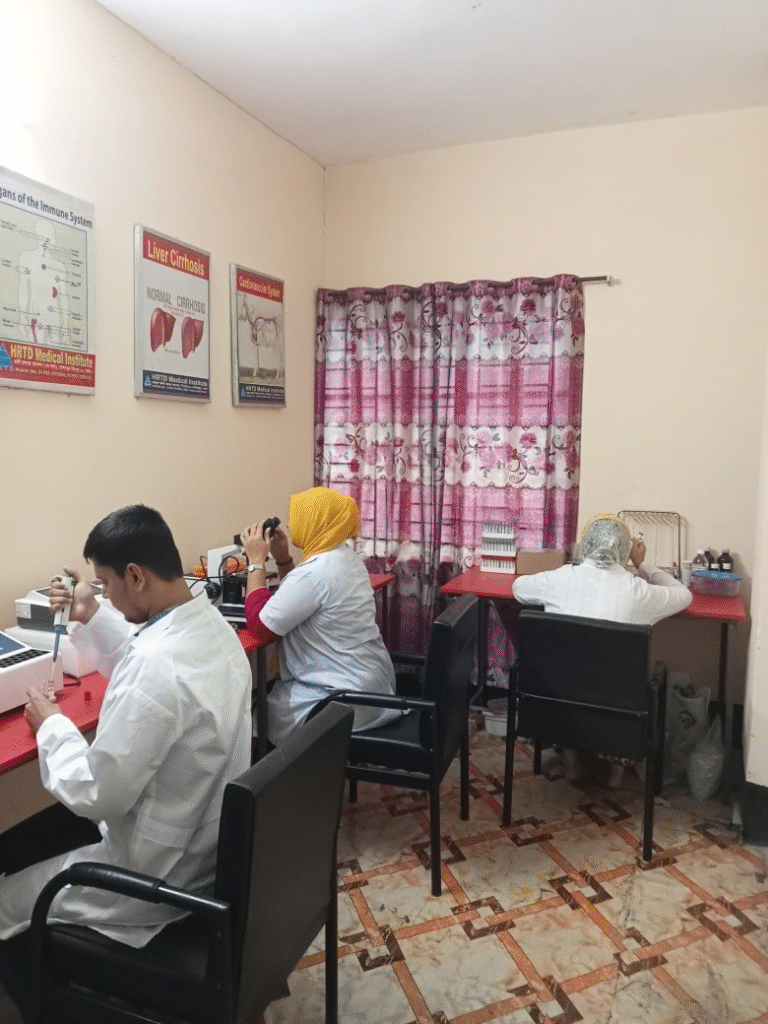
In Bangladesh, particularly in Dhaka, there is a growing need for well-trained laboratory professionals. Hospitals, diagnostic centers, private clinics, research facilities, and pharmaceutical companies are constantly looking for laboratory personnel who understand clinical pathology, hematology, microbiology, biochemistry, histopathology, immunology, cytology, and modern diagnostic technologies.
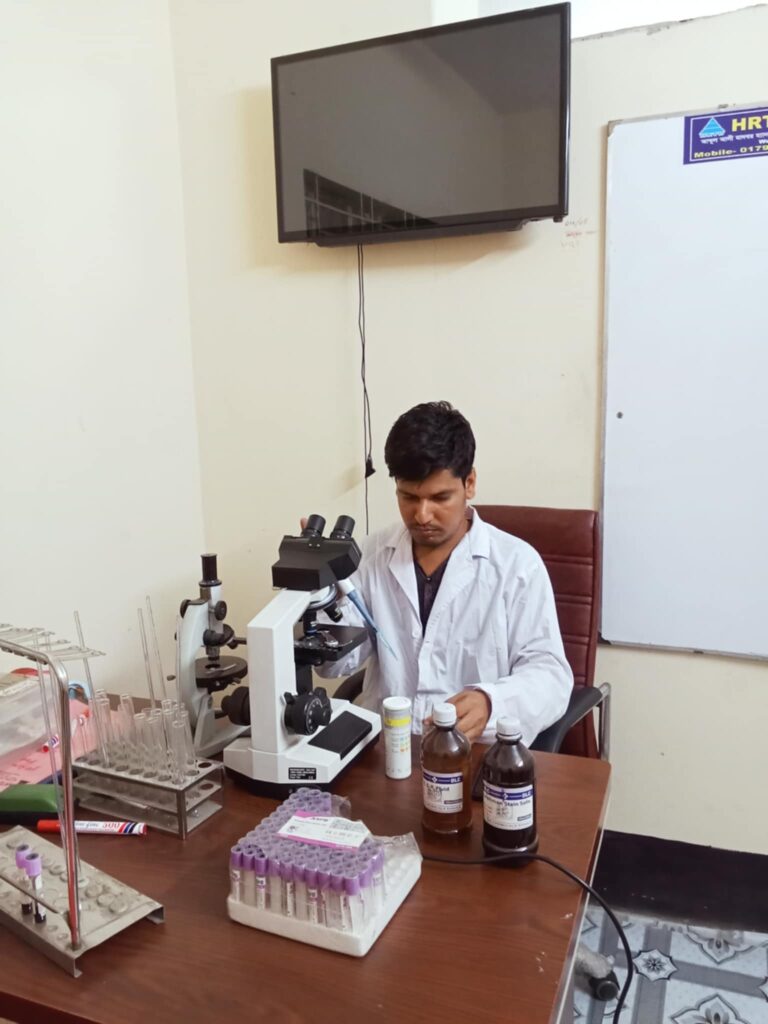
In this context, HRTD Medical Institute has distinguished itself as a learning hub that combines industry standards, academic depth, and practical experience. Located at Section-6, Block-Kha, Road-1, Plot-11, Metro Rail Pillar-249, Folpotti Mosque Lane, Mirpur-10, Dhaka-1216, the institute has become known for its hands-on laboratory training, updated curriculum, and excellent student support. With strong mentorship and ethical values, it provides one of the best pathology training programs in Dhaka.
This article will explore in detail:
- The nature and scope of pathology as a discipline
- Why pathology training is crucial in healthcare
- What makes HRTD Medical Institute a leading choice
- Detailed course modules and learning outcomes
- Laboratory overview and practical exposure
- Faculty, facilities, student experience
- Career pathways, job prospects, and admission process
Understanding Pathology: The Scientific Foundation of Diagnosis
Pathology is the study of disease — its causes, mechanisms, effects on cells and tissues, and clinical implications. The word itself originates from Greek:
pathos = suffering or disease,
logos = study or science.
To truly understand pathology, one must understand how diseases behave in the body. A pathologist or lab technologist examines biological samples and interprets them using modern diagnostic techniques.
Core Branches of Pathology
Pathology is not a single subject — it is a collection of interconnected scientific domains:
- Clinical Pathology
Deals with blood, urine, stool, body fluids, and routine laboratory investigations.
Includes:- Hematology
- Clinical biochemistry
- Clinical microbiology
- Serology and immunology
- Anatomical Pathology
Focused on tissue structure and cell morphology.
Includes:- Histopathology
- Cytopathology
- Surgical pathology
- Autopsy pathology
- Molecular Pathology
Modern approach integrating genetics, molecular biology, and biotechnology.
Highly relevant in cancer diagnosis, drug response prediction, and personalized medicine.
Understanding these components helps students grasp why pathology is essential in every clinical decision. In Bangladesh, laboratory-based diagnosis is increasing rapidly — particularly after the COVID-19 pandemic — and institutions like HRTD Medical Institute have become central to professional training.
Why Pathology Training Matters
Modern hospitals rely heavily on laboratory results. Across all specialties — medicine, surgery, pediatrics, gynecology, dermatology, orthopedics — clinicians need laboratory confirmation. Properly trained lab technologists ensure:
✔️ Accurate Results
Right methodology, correct reagent use, proper sample collection, and error-free processing.
✔️ Timely Reporting
Lab professionals who understand workflow deliver results efficiently without compromising quality.
✔️ Ethical Conduct
Handling patient data, biohazard safety, and medical confidentiality.
✔️ Patient Trust
When people know the laboratory is reliable, they trust medical recommendations.
Bangladesh’s healthcare industry is growing. Diagnostic services are expanding both in urban centers like Dhaka and in district towns. The demand for competent laboratory professionals is rising every year. A student who completes a structured pathology training course becomes employable in medical laboratories, hospitals, diagnostic centers, pharma labs, and research facilities.
HRTD Medical Institute: A Leading Pathology Training Hub in Dhaka
Located in a prime medical education zone of Dhaka, HRTD Medical Institute is built on three core values:
1. Practical Training Above Theory
Many institutions rely mainly on lectures.
HRTD Medical Institute emphasizes hands-on laboratory practice, which makes students job-ready.
2. Updated Curriculum
The pathology program integrates traditional laboratory science with:
- Automation
- Digital pathology
- Laboratory quality control
- Biosafety and waste management
- Patient communication
3. Career Development Support
Students are not just learners — they are future professionals.
The institute provides:
- Mentorship
- References
- Internship opportunities
- Career counseling
- Job placement guidance
Program Overview — Best Pathology Training Course at HRTD Medical Institute
The pathology training course is structured to fulfill needs of:
- Medical students
- Medical lab technology students
- Diploma and BSc students in biological sciences
- Pharmacology and nursing students
- Medical job aspirants
- Diagnostic center staff
- Healthcare professionals shifting careers
The curriculum is designed to be industry-aligned, ensuring that once students complete training, they can confidently work in real laboratory settings.
Detailed Course Modules
Below is a comprehensive academic breakdown of the subject areas included in the program.
Module 1 — Fundamentals of Pathology
Students begin with the foundations:
- Definition of pathology
- Disease mechanisms
- Cellular injury
- Necrosis vs apoptosis
- Inflammation and reparative processes
- Adaptation of cells — hyperplasia, hypertrophy, metaplasia
- Immunopathology basics
- Concepts of diagnosis vs prognosis
These core principles help learners interpret laboratory findings in a clinical context.
Module 2 — Hematology

5
One of the most active areas of laboratory work:
- Complete Blood Count (CBC)
- RBC indices
- Hemoglobin estimation
- Platelet morphology
- ESR testing
- Blood grouping & cross-matching
- Peripheral blood smear (PBS) examination
- Reticulocyte count
- Coagulation profile: PT, aPTT, INR
- Bone marrow smear preparation
Students learn microscope use, staining techniques (e.g., Giemsa, Leishman), sample handling, and error prevention.
Module 3 — Clinical Biochemistry
Biochemistry tests reflect internal organ functions:
- Blood sugar
- HbA1c
- Lipid profile
- Liver function tests (SGOT/AST, SGPT/ALT, ALP, GGT, bilirubin)
- Kidney function tests (urea, creatinine, electrolytes)
- Thyroid panel
- Enzyme markers
Students learn how analyzers work, reagent preparation, calibration, and reference interpretation.
Module 4 — Microbiology
This module teaches how to identify infectious agents:
- Culture and colony morphology
- Gram staining
- Biochemical tests
- Antibiotic sensitivity (Kirby–Bauer method)
- Sample collection for urine, stool, sputum, pus, wound swabs
- Infection control measures
- Biosafety cabinets
- Viral serology basics
Students practice safe handling of cultures — a key skill in clinical laboratories.
Practical Laboratory Exposure
Unlike purely theoretical courses, the training at HRTD Medical Institute gives every student:
- Weekly practical labs
- Guided microscopy
- Real sample handling (within ethical standards)
- Diagnostic machine operation
- Reporting practice
- Case-based interpretation
Laboratory staff supervise each step, ensuring no student is left behind.
Tools & Instruments Students Learn
- Compound microscope
- Centrifuge
- Microtome
- Biochemistry analyzers
- Hematology analyzers
- ELISA reader
- Biosafety cabinet
- Autoclave
- Incubator
They learn maintenance, troubleshooting, calibration, and basic workflow management.
Faculty & Teaching Approach
A training course is only as good as its teachers.
HRTD Medical Institute has:
- Experienced pathologists
- Senior laboratory technologists
- Clinical microbiologists
- Academic lecturers
- Industry trainers
Faculty members encourage interactive instruction, connecting laboratory practices to real clinical cases. This academic depth distinguishes the institution.
Learning Style & Academic Philosophy
The institute follows a competency-based training approach. Each student develops:
- Technical skills
- Scientific reasoning
- Ethical conduct
- Teamwork
- Communication with clinicians
The goal is not memorization, but problem-solving and interpretation.
Students are encouraged to ask questions, repeat procedures, and master laboratory etiquette.
Course Duration
HRTD Medical Institute typically offers pathology training ranging from:
- Short Intensive Course (3 months)
- Professional Certification Course (6 months)
- Advanced Pathology Training (6–12 months)
Duration may vary based on student background and depth of specialization.
Assessment & Evaluation
Student performance is evaluated through:
- Practical exams
- Written assessments
- Case presentations
- Skill demonstrations
- Attendance and lab safety compliance
This ensures that certification reflects real competency.
Career Opportunities After the Course
5
Upon completion, graduates can work in:
- Hospital laboratories
- Private diagnostic centers
- Research labs
- NGO medical projects
- Pharmaceutical quality control labs
- Public health programs
- Blood banks
- Pathology departments
Some students pursue higher education such as:
- Diploma in Medical Laboratory Technology
- BSc MLS
- Masters in pathology, microbiology, biochemistry, or molecular biology
Others become lab administrators or start their own diagnostics initiatives.
Student Support & Learning Environment
HRTD Medical Institute understands that many learners are working individuals or students juggling academic schedules. Therefore:
- Flexible class times
- Supportive instructors
- Small-group laboratory practice
- Mentorship and counseling
- Friendly administrative support
The institute promotes respect, empathy, and a scientific mindset.
Why Choose HRTD Medical Institute Over Others?
- Practical, real-world training
Not just theory — students learn with real samples and instruments. - Experienced faculty
Clinical experts who understand pathology beyond textbooks. - Updated content
Modules aligned with modern healthcare needs. - Affordable, accessible, and career-oriented
Designed for Bangladesh’s healthcare environment. - Mentorship beyond certification
Students receive career guidance long after finishing. - Location advantage
Situated in Mirpur-10, easily reachable from many parts of Dhaka.
Biosafety & Ethical Standards
Training includes:
- Laboratory hygiene
- Needle-stick injury prevention
- Biohazard disposal protocol
- PPE use
- Patient confidentiality
Students learn to handle specimens responsibly and respectfully.
Community Impact
By training competent laboratory professionals, HRTD Medical Institute contributes to:
- Better diagnostic accuracy
- Reduced unnecessary medical tests
- Lower healthcare costs
- Early disease detection
- Improved medical decision-making
This is not just an academic mission — it is a public health contribution.
Admission Procedure
Admission is simple and student-friendly.
Basic Requirements:
- SSC or HSC graduates
- Medical or biological science students
- Diploma/MLT students
- Healthcare professionals
- Enthusiastic beginners with interest
Steps:
- Fill out registration form (in-person or via phone)
- Consultation with academic coordinator
- Course selection (short or professional)
- Orientation and classroom enrollment
Contact:
📞 01797522136 / 01987073965 / 01784572173
📍 Section-6, Block-Kha, Road-1, Plot-11, Metro Rail Pillar-249, Folpotti Mosque Lane, Mirpur-10, Dhaka-1216