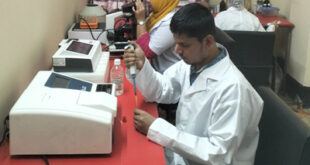
 Pathology Training Institute in Bangladesh Best Pathology Training Institute in Bangladesh

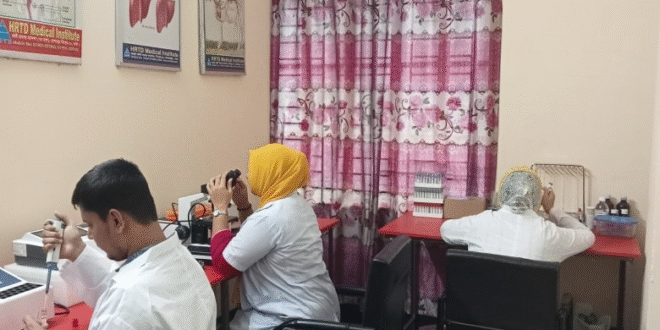
Best Pathology Course in Dhaka 01797522136
In the modern healthcare ecosystem, pathology stands as the backbone of diagnosis, clinical decision-making, and patient management. Whether a patient suffers from a simple infection, chronic disease, cancer, metabolic disorder, hormonal imbalance, or autoimmune condition—laboratory medicine is the first and most essential step in identifying health issues. Dhaka, being the medical hub of Bangladesh, offers numerous training institutions and diagnostic centers. Yet, when it comes to structured, career-focused, hands-on pathology training, one name stands above the rest: HRTD Medical Institute.
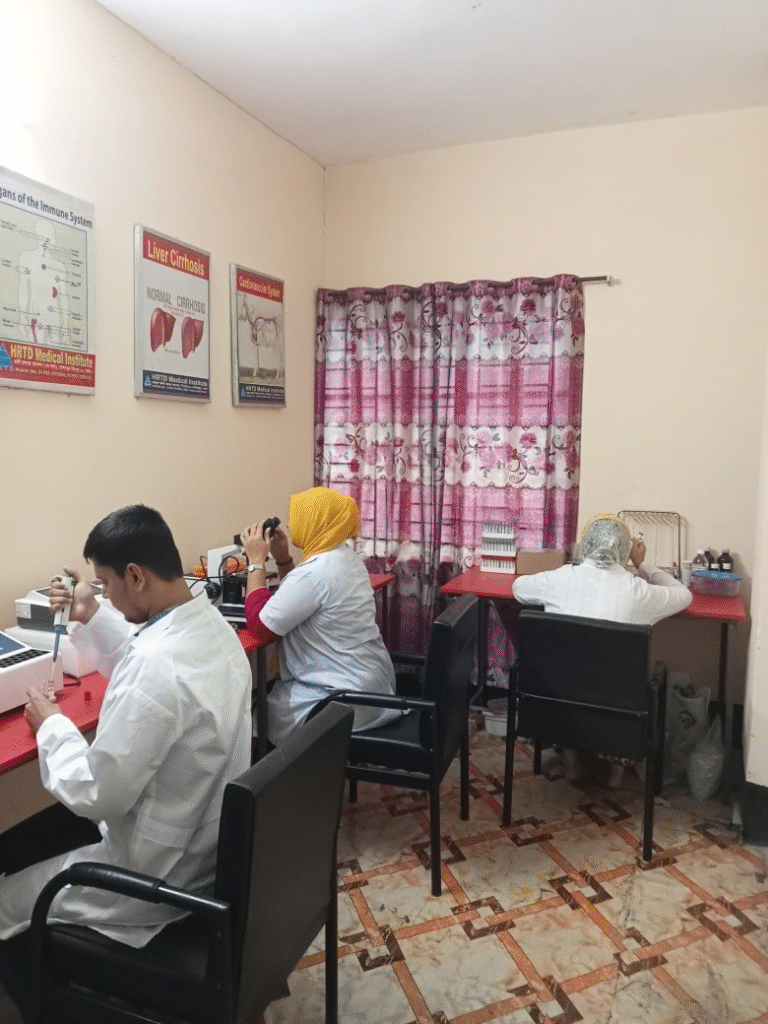
Located at Section-6, Block-Kha, Road-1, Plot-11, Metro Rail Pillar-249, Folpotti Mosque Lane, Mirpur-10, Dhaka-1216, HRTD Medical Institute has established itself as a leading provider of practical clinical laboratory education. With a unique curriculum, advanced lab facilities, experienced instructors, and real diagnostic workflow exposure, the institute offers learners a complete pathway to becoming competent pathology professionals.
This article explores why HRTD Medical Institute offers the best pathology course in Dhaka, the structure of its programs, student benefits, career pathways, training methodologies, and how it prepares learners for the evolving job market in Bangladesh and abroad.
1. Understanding Pathology: The Science Behind Diagnosis
Before discussing the course itself, it is essential to understand the domain of pathology. Pathology is the branch of medical science that investigates:
- Disease causes (etiology)
- Mechanisms of disease development (pathogenesis)
- Structural, biochemical, and physiological changes
- Clinical consequences and manifestations
Pathology links the science of laboratory investigation to the art of clinical treatment. In practical healthcare:
- A patient may have a fever — pathology helps identify if it is viral, bacterial, parasitic, or autoimmune.
- A patient may have liver pain — laboratory markers like ALT, AST, bilirubin, or GGT tell which part is affected.
- A patient may develop anemia — hemoglobin, MCV, iron profile, or hematocrit help narrow down the cause.
- A woman may have pregnancy complications — TORCH panel, β-hCG, urine analysis, and CBC provide vital information.
Doctors rely on pathology to guide treatment.
Without laboratory input, medical diagnosis becomes inconsistent or risky. As Bangladesh’s healthcare system expands rapidly, the demand for skilled pathology professionals is increasing proportionally. This is why structured pathology training programs are becoming crucial.
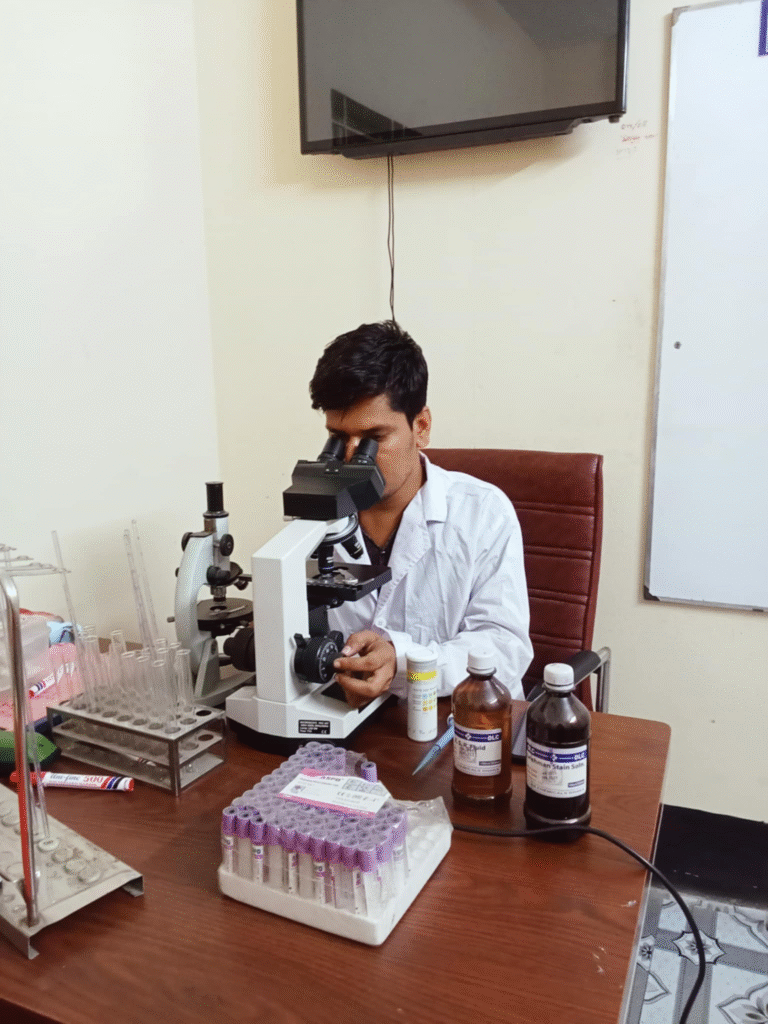
2. Why Pathology Training Matters in Bangladesh
Bangladesh has more than 2,500 registered medical diagnostic centers, thousands of clinics, and nearly 700 hospitals across public and private sectors. Every one of these healthcare institutions needs trained laboratory technicians, quality control professionals, biomedical scientists, and pathology assistants.
As medical testing requirements grow due to:
- Urbanization
- Lifestyle changes
- Chronic disease prevalence
- Aging population
- Public health expansion
- Global diagnostic standards
the employment opportunities in clinical laboratories continue to expand.
Yet, the biggest challenge is lack of proper training.
Many job seekers complete short, unstructured laboratory courses that provide theoretical knowledge but minimal practical exposure. As a result:
- Students fail to operate analyzers confidently.
- They struggle to manage test samples.
- They cannot interpret basic lab parameters.
- They make errors in result documentation.
This gap is exactly what HRTD Medical Institute was created to solve.
3. About HRTD Medical Institute — A New Era of Hands-On Training
Institution Overview
HRTD Medical Institute is located in Mirpur-10, a busy and accessible part of Dhaka city. The institute is known for:
- Evidence-based teaching
- Clinical environment simulation
- Practical laboratory sessions
- Industry-standard protocols
Students are not just taught theory; they are trained in the same way professional pathology technicians work in real diagnostic laboratories.
Core Values of the Institute
- Skill over memorization
- Real-world exposure
- Safe laboratory practice
- Affordable training
- Employment orientation
The institute is staffed with teachers who have real diagnostic laboratory experience—not purely academic instructors who have never handled test samples in real life.
Institution Contact
📍 Section-6, Block-Kha, Road-1, Plot-11, Metro Rail Pillar-249, Folpotti Mosque Lane, Mirpur-10, Dhaka-1216
☎️ 01797522136, 01987073965, 01784572173
4. Why HRTD Medical Institute Offers the Best Pathology Course in Dhaka
Several factors make HRTD Medical Institute exceptional:
4.1. Practical-Oriented Curriculum
The course includes real sample processing, quality control, equipment operation, and full testing workflow.
Students learn:
- Hematology
- Clinical biochemistry
- Serology and immunology
- Microbiology
- Parasitology
This curriculum teaches not only what tests are but how they are performed in laboratories.
4.2. Real Laboratory Exposure
Instead of just classroom lectures, students use actual:
- Hematology analyzers
- Coagulation analyzers
- Biochemistry analyzers
- Microscopes
- Centrifuges
- Sterilization systems
- Quality control kits
They also practice:
- Sample handling
- Test result documentation
- Reagent preparation
- Instrument calibration
4.3. Instructors with Clinical Experience
Teachers at HRTD are:
- Licensed laboratory technologists
- Senior pathology technicians
- Hospital lab supervisors
- Diagnostic industry professionals
This ensures that students learn the practical logic behind testing—not just textbook definitions.
4.4. Perfect for Beginners
No medical degree is required. SSC/HSC students, diploma students, nurses, medical assistants, and working lab staff can join.
4.5. Affordable
Traditional diploma courses can cost high fees over several years. HRTD provides shorter-duration professional training that is highly affordable.
4.6. Job Orientation
Graduates can easily find work in:
- Diagnostic centers
- Hospitals
- Private laboratories
- International clinics
- NGO health programs
- Medical camps
Thousands of lab jobs are available every year—and qualified technicians are highly demanded.
5. Details of the Best Pathology Course at HRTD Medical Institute
Below is a structured breakdown of what students learn.
5.1. Hematology Module
Hematology is the study of blood. It teaches students:
- Blood collection techniques
- Anticoagulants
- CBC (Complete Blood Count)
- RBC, WBC, and platelet morphology
- ESR measurement
- Differential count
- Peripheral blood smear
- Hemoglobin estimation
Students use microscopes to identify:
- Neutrophils
- Lymphocytes
- Basophils
- Eosinophils
- Monocytes
They also learn how abnormalities indicate disease:
- Leukocytosis—possible infection
- Anemia—nutritional deficiency or bleeding
- Thrombocytopenia—possible dengue or other bleeding disorders
5.2. Clinical Biochemistry
Biochemistry reflects metabolic health. Students learn:
- Liver function tests (ALT, AST, ALP, Bilirubin)
- Renal function tests (Urea, Creatinine, eGFR)
- Lipid profile (Triglycerides, HDL, LDL)
- Blood glucose estimation
- Electrolytes (K+, Na+, Cl−)
Biochemical analyzers are used to measure these parameters. Students learn:
- Sample dilution
- Calibration
- Reagent stability
- Quality control
5.3. Urine and Stool Examination
Basic pathological investigation includes:
- Microscopic urine analysis
- Urine dipstick parameters (protein, ketone, glucose)
- Stool ova and cyst detection
- Parasitic identification
- Urinary crystals analysis
- Cast identification
These tests are integral in diagnosing infections, renal disorders, and metabolic issues.
5.4. Microbiology and Serology
Students learn:
- Sample culture techniques
- Media preparation
- Gram staining
- Bacterial colony morphology
- Rapid diagnostic kits
Serology topics include:
- Dengue NS1
- HIV screening
- Hepatitis
- VDRL
- Typhoid
- CRP
These tests identify infectious diseases and inflammatory conditions.
5.5. Immunology
The immune system is becoming increasingly important in diagnostics.
Students explore:
- IgE (allergy indicators)
- ANA (autoimmune screening)
- Rheumatoid factor
- Antibody-antigen reactions
6. How the Course is Delivered
6.1. Classroom Theory
Students learn concepts clearly before entering the lab. Lectures are simple, application-oriented, and exam-friendly.
6.2. Hands-On Lab Practice
Daily or weekly supervised sessions inside the institute’s laboratory.
Students physically:
- Use analyzers
- Prepare slides
- Observe microorganisms
- Write lab reports
- Interpret numeric results
6.3. Case-Based Learning
Students receive real lab cases:
- Dengue suspected
- Diabetes screening
- Thyroid dysfunction
- Kidney injury
- Jaundice
They analyze test profiles and draw conclusions.
7. Admission Requirements
The course welcomes:
- SSC
- HSC
- Laboratory employees
- Nurses
- Medical assistants
- Diploma/MBBS students seeking lab skills
8. Course Duration
- Training Course (6/12 months)
- Diploma Course (2/3/4 years)
Batch types:
- Morning
- Afternoon
- Weekend
This flexibility benefits working students or job-seekers.
9. Certification
Upon completion, students receive a professional certificate from HRTD Medical Institute indicating:
- Skill development
- Practical laboratory experience
- Course module completion
This credential is useful for employment in clinics, diagnostic centers, and NGO healthcare programs.
10. Job Opportunities for Graduates
HRTD pathology course graduates can work as:
- Laboratory technicians
- Assistant pathology technologists
- Phlebotomists
- Microbiology assistants
- Diagnostic center operators
With experience, they can advance into:
- Lab supervisors
- Senior diagnostic technologists
- Department managers
11. Why Employers Prefer HRTD Graduates
Because the institute focuses on:
- Practical skill mastery
- Instrument operation
- Proper sample handling
- Clinical communication
- Safety and hygiene protocols
12. Facilities and Environment
HRTD Medical Institute provides:
- Fully equipped training laboratory
- Microscopy stations
- Biochemistry analyzers
- Hematology analyzers
- Modern sterilization equipment
- Demonstration kits
- Classroom multimedia
- Safe sample practice
- Clean workspace
- Trainer supervision
13. Why Students Choose HRTD Over Other Institutes
- Affordable without sacrificing quality
- Real clinical workflow
- Individual student attention
- Qualified instructors
- Job-focused training
- Central location
- Professional certificate
Dhaka has many short courses but very few guarantee genuine skill development. HRTD Medical Institute fills that gap.
14. Final Thoughts
Pathology training is no longer optional—it defines the future of diagnostic healthcare in Bangladesh. With medical testing becoming digital, automated, and patient-centered, the demand for professionally trained lab personnel will only increase.
If you want an institution in Dhaka that is:
- Practical
- Affordable
- Employment-oriented
- Student-friendly
- Scientifically sound
Then HRTD Medical Institute stands as the strongest choice.
Whether you are a beginner or looking to upgrade your skills, HRTD’s pathology course equips you with real laboratory abilities, makes you job-ready, and provides a foundation for a career in medical diagnostics.